
Automatic English translation of the article published in La Nuova Provincia, 13 October 2026
From Calliano Monferrato to Dresden University: The Faema Coffee Machine from “Bar della Pace” Goes Robotic
The historic coffee machine now prepares espresso autonomously with the help of two robotic arms in the laboratory of Calliano-born researcher Gianaurelio Cuniberti
A historic espresso machine from the Bar della Pace in Calliano Monferrato, affectionately known to everyone as the “legendary Martin’s Café,” has made its way to Dresden University in Germany, where it has been integrated into a robotic workstation capable of preparing coffee autonomously.
The unusual story was shared by Paolo Belluardo, the mayor of Calliano, who recalls the important role the café played in village life. For many years, thanks to siblings Anna and Giuseppe, the café served as a gathering place for generations of customers, where card games, gossip, and political debates were part of everyday life — “back when politics was Politics with a capital P” — all in an atmosphere of joy and carefree conviviality.
A Faema E61: Where History Meets Innovation
At the heart of the story is a single-group Faema E61, an iconic example of Italian industrial design. The machine retains its distinctive curved chrome-plated steel housing, pressure gauges, operating levers, and steam wand, as well as the red backlit sign displaying the model's name. Following its transfer to Germany, the machine was entrusted to Gianaurelio Cuniberti, a native of Calliano Monferrato, an engineer with a doctorate, and a professor and researcher at Dresden University.
With the support of his colleagues, the coffee machine was incorporated into a robotic workstation designed to automate the steps involved in preparing espresso.
Robotic Arms Prepare the Espresso
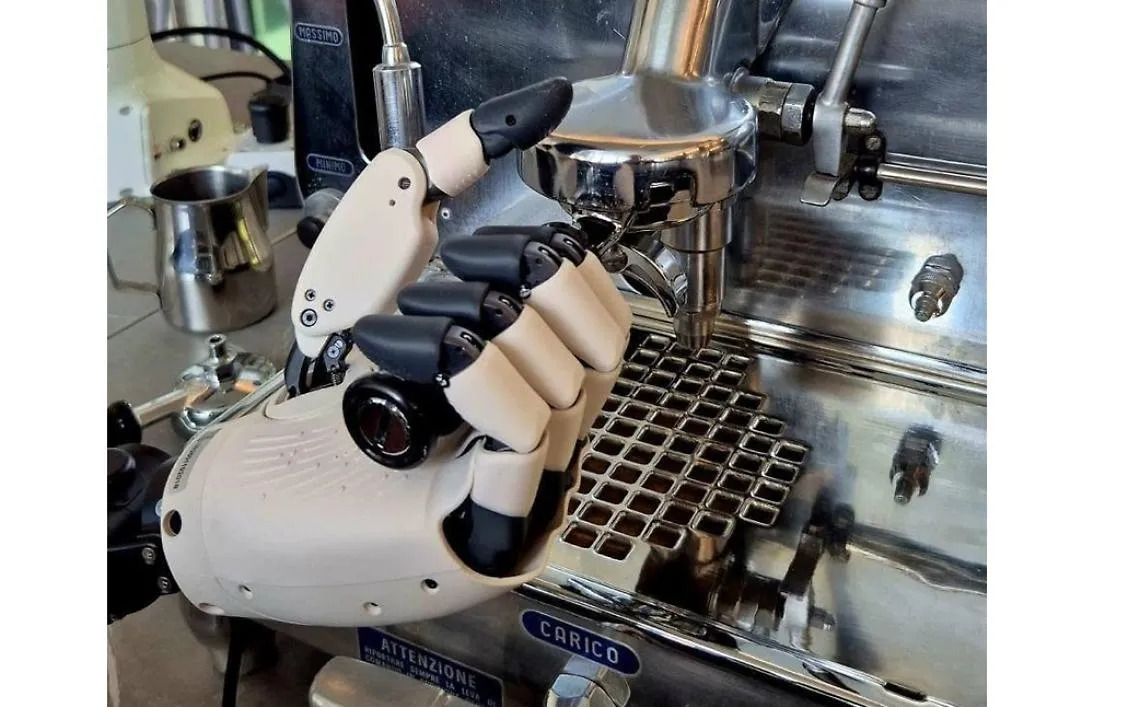
The workstation features two robotic arms with complementary functions. One, positioned on the work surface next to the coffee machine, is designed to handle the espresso cup. The other, mounted on an overhead structure and equipped with a mechanical gripper, assists with the serving process. In the German laboratory, a machine that served customers in a Monferrato café for many years has thus become part of an experiment combining the tradition of Italian espresso with modern robotics. Cuniberti conducts research in the fields of materials science, biosensors, and artificial intelligence, working on innovative projects and patents with potential industrial applications.
A Source of Pride for Calliano
The story has inspired pride among both the local administration and the residents of Calliano. For the village, the coffee machine represents not only a piece of its collective memory, but also a tangible connection to Cuniberti's professional achievements. As the mayor emphasizes, Cuniberti is admired not only for his scientific accomplishments but also for having maintained his “natural simplicity” despite his success.
Automatic English translation of the article published in La Nuova Provincia, 13 October 2026
From Calliano Monferrato to Dresden University: The Faema Coffee Machine from “Bar della Pace” Goes Robotic
The historic coffee machine now prepares espresso autonomously with the help of two robotic arms in the laboratory of Calliano-born researcher Gianaurelio Cuniberti
A historic espresso machine from the Bar della Pace in Calliano Monferrato, affectionately known to everyone as the “legendary Martin’s Café,” has made its way to Dresden University in Germany, where it has been integrated into a robotic workstation capable of preparing coffee autonomously.
The unusual story was shared by Paolo Belluardo, the mayor of Calliano, who recalls the important role the café played in village life. For many years, thanks to siblings Anna and Giuseppe, the café served as a gathering place for generations of customers, where card games, gossip, and political debates were part of everyday life — “back when politics was Politics with a capital P” — all in an atmosphere of joy and carefree conviviality.
A Faema E61: Where History Meets Innovation
At the heart of the story is a single-group Faema E61, an iconic example of Italian industrial design. The machine retains its distinctive curved chrome-plated steel housing, pressure gauges, operating levers, and steam wand, as well as the red backlit sign displaying the model's name. Following its transfer to Germany, the machine was entrusted to Gianaurelio Cuniberti, a native of Calliano Monferrato, an engineer with a doctorate, and a professor and researcher at Dresden University.
With the support of his colleagues, the coffee machine was incorporated into a robotic workstation designed to automate the steps involved in preparing espresso.
Robotic Arms Prepare the Espresso
The workstation features two robotic arms with complementary functions. One, positioned on the work surface next to the coffee machine, is designed to handle the espresso cup. The other, mounted on an overhead structure and equipped with a mechanical gripper, assists with the serving process. In the German laboratory, a machine that served customers in a Monferrato café for many years has thus become part of an experiment combining the tradition of Italian espresso with modern robotics. Cuniberti conducts research in the fields of materials science, biosensors, and artificial intelligence, working on innovative projects and patents with potential industrial applications.
A Source of Pride for Calliano
The story has inspired pride among both the local administration and the residents of Calliano. For the village, the coffee machine represents not only a piece of its collective memory, but also a tangible connection to Cuniberti's professional achievements. As the mayor emphasizes, Cuniberti is admired not only for his scientific accomplishments but also for having maintained his “natural simplicity” despite his success.
