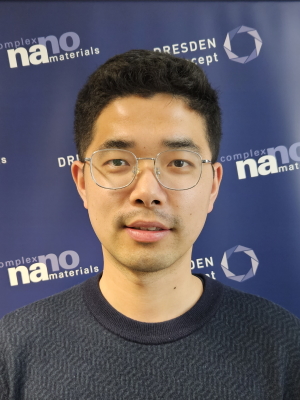
This talk focuses on the construction and functional control of chiral conductive materials through supramolecular assembly, chirality modulation, and chirality-induced spin selectivity (CISS). First, polyaniline supramolecular fibers with molecular or structural chirality were constructed to investigate chirality at different structural levels. Electric-field control of supramolecular chirality was achieved, enabling reversible modulation of circularly polarized luminescence (CPL) from achiral fluorescent molecules. Combined with the tunable conductivity of polyaniline, this approach was applied to dual-level information encryption. Furthermore, spin-selective electron transport in chiral polyaniline fibers was investigated, revealing the role of supramolecular structural chirality in spin polarization. Chirality-induced spin filtering was also extended to coordination assemblies for chiral molecular recognition and signal amplification. More recently, chirality engineering was extended to two-dimensional conductive metal–organic frameworks (c-MOFs). Chiral induction enabled controlled rotational layer stacking, producing long-range helical structures that integrate structural chirality, conductive pathways, and chiral pores. The effects of helical chirality on anisotropic spin-selective transport and enantioselective molecular recognition were further investigated. These studies provide a platform for exploring chiral conductive materials in spintronics, chiral sensing, and electrochemical catalysis applications.
This talk focuses on the construction and functional control of chiral conductive materials through supramolecular assembly, chirality modulation, and chirality-induced spin selectivity (CISS). First, polyaniline supramolecular fibers with molecular or structural chirality were constructed to investigate chirality at different structural levels. Electric-field control of supramolecular chirality was achieved, enabling reversible modulation of circularly polarized luminescence (CPL) from achiral fluorescent molecules. Combined with the tunable conductivity of polyaniline, this approach was applied to dual-level information encryption. Furthermore, spin-selective electron transport in chiral polyaniline fibers was investigated, revealing the role of supramolecular structural chirality in spin polarization. Chirality-induced spin filtering was also extended to coordination assemblies for chiral molecular recognition and signal amplification. More recently, chirality engineering was extended to two-dimensional conductive metal–organic frameworks (c-MOFs). Chiral induction enabled controlled rotational layer stacking, producing long-range helical structures that integrate structural chirality, conductive pathways, and chiral pores. The effects of helical chirality on anisotropic spin-selective transport and enantioselective molecular recognition were further investigated. These studies provide a platform for exploring chiral conductive materials in spintronics, chiral sensing, and electrochemical catalysis applications.