


Last century, the nature of strong interactions between atoms, being responsible for configuration and conformation of molecules, were in the focus of chemical research activities. Nowadays, in modern quantum chemistry, such strong interactions are rather well understood and became an indispensable tool for all fields of chemistry. However, the description of weak interactions between atoms and molecules, which are responsible for the characteristics of the solid and liquid state, mostly remain unsolved and therefore attract considerable attention. In recent years, theoretical chemistry has contributed efficiently to the desired knowledge, as demonstrated by the rapidly increasing number of papers in computational chemistry on the topic of non-covalent and intermolecular interactions. Various methods are available for computations, whereas the development, assessment and combinations of these methods are in the center of this presentation. The computational applications are manifold. Here, we focus on intermolecular interactions between molecules [1-4], molecular arrangements on surfaces [5-7], and in molecular crystals [8-9]. For the latter, its implications to the recent blind test of organic crystal structure prediction methods [10] will be discussed.
REFERENCES:
[1] Emmanuel Semidalas, A. Daniel Boese, and Jan M. L. Martin, Chem. Phys. Lett. 863, 141874 (2025).
[2] Vladimir Fishman, Michal Lesiuk, Jan M. L. Martin, and A. Daniel Boese, J. Chem. Theor. Comput. 21, 2311 (2025).
[3] Johannes Hoja and A. Daniel Boese, J. Chem. Phys. 161, 234110 (2024).
[4] Xianyuan Wu, Peter E. Hartmann, Dimitri Berne, Mario De Bruyn, Florian Cuminet, Zhiwen, Wang, Johannes M. Zechner, A. Daniel Boese, Vincent Placet, Sylvain Caillol, and Katalin Barta, Science, 384, eadj9989 (2024).
[5] A. Daniel Boese and Joachim Sauer, PhysChemChemPhys 15, 16481 (2013).
[6] A. Daniel Boese and Joachim Sauer, J. Comput. Chem. 37, 2374 (2016).
[7] A. Daniel Boese and Peter Saalfrank, J. Phys. Chem. C 120, 12637 (2016).
[8] Johannes Hoja, Alexander List, and A. Daniel Boese, J. Chem. Theory Comput. 20, 357 (2024).
[9] Alexander List, A. Daniel Boese, and Johannes Hoja, submitted to J. Chem. Phys, arXiv preprint arXiv:2512.16877 (2025).
[10] Lily M. Hunnisett et al., Acta Cryst. B 80, 548-574 (2024).
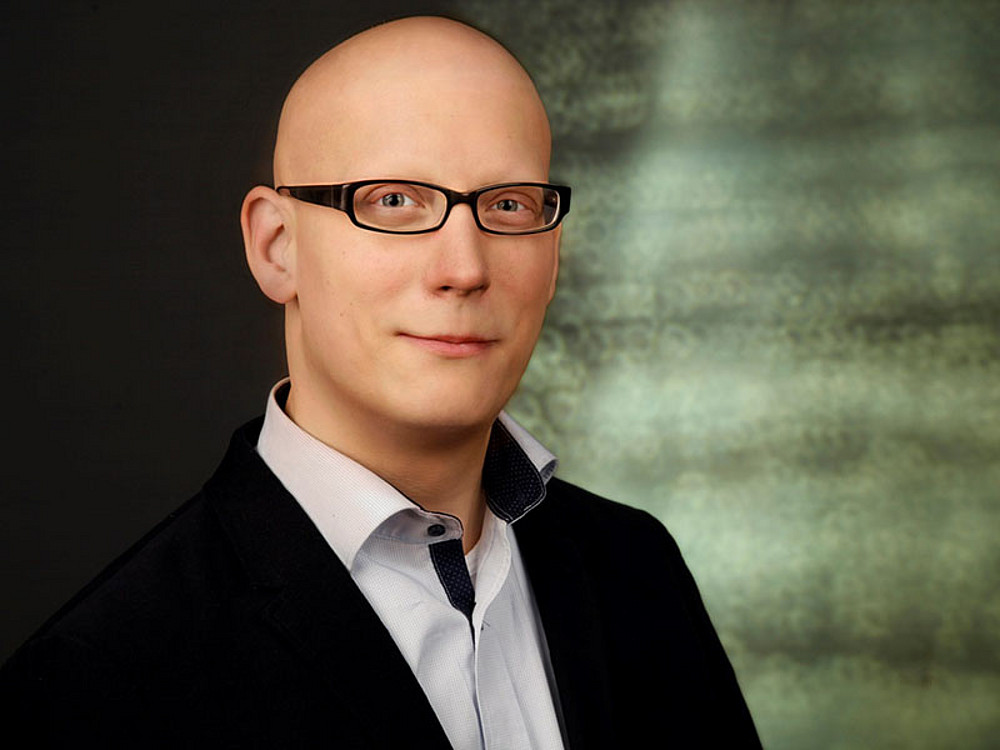
Daniel Boese is Professor of Computational Physical Chemistry at the University of Graz. His research focuses on electronic structure theory, particularly density functional theory (DFT), embedding methods, and intermolecular interactions, with applications to complex molecular
and solid-state systems.

Last century, the nature of strong interactions between atoms, being responsible for configuration and conformation of molecules, were in the focus of chemical research activities. Nowadays, in modern quantum chemistry, such strong interactions are rather well understood and became an indispensable tool for all fields of chemistry. However, the description of weak interactions between atoms and molecules, which are responsible for the characteristics of the solid and liquid state, mostly remain unsolved and therefore attract considerable attention. In recent years, theoretical chemistry has contributed efficiently to the desired knowledge, as demonstrated by the rapidly increasing number of papers in computational chemistry on the topic of non-covalent and intermolecular interactions. Various methods are available for computations, whereas the development, assessment and combinations of these methods are in the center of this presentation. The computational applications are manifold. Here, we focus on intermolecular interactions between molecules [1-4], molecular arrangements on surfaces [5-7], and in molecular crystals [8-9]. For the latter, its implications to the recent blind test of organic crystal structure prediction methods [10] will be discussed.
REFERENCES:
[1] Emmanuel Semidalas, A. Daniel Boese, and Jan M. L. Martin, Chem. Phys. Lett. 863, 141874 (2025).
[2] Vladimir Fishman, Michal Lesiuk, Jan M. L. Martin, and A. Daniel Boese, J. Chem. Theor. Comput. 21, 2311 (2025).
[3] Johannes Hoja and A. Daniel Boese, J. Chem. Phys. 161, 234110 (2024).
[4] Xianyuan Wu, Peter E. Hartmann, Dimitri Berne, Mario De Bruyn, Florian Cuminet, Zhiwen, Wang, Johannes M. Zechner, A. Daniel Boese, Vincent Placet, Sylvain Caillol, and Katalin Barta, Science, 384, eadj9989 (2024).
[5] A. Daniel Boese and Joachim Sauer, PhysChemChemPhys 15, 16481 (2013).
[6] A. Daniel Boese and Joachim Sauer, J. Comput. Chem. 37, 2374 (2016).
[7] A. Daniel Boese and Peter Saalfrank, J. Phys. Chem. C 120, 12637 (2016).
[8] Johannes Hoja, Alexander List, and A. Daniel Boese, J. Chem. Theory Comput. 20, 357 (2024).
[9] Alexander List, A. Daniel Boese, and Johannes Hoja, submitted to J. Chem. Phys, arXiv preprint arXiv:2512.16877 (2025).
[10] Lily M. Hunnisett et al., Acta Cryst. B 80, 548-574 (2024).
Daniel Boese is Professor of Computational Physical Chemistry at the University of Graz. His research focuses on electronic structure theory, particularly density functional theory (DFT), embedding methods, and intermolecular interactions, with applications to complex molecular
and solid-state systems.
