

The design of sensors for biological analysis, from molecules to cells, has traditionally focused on two pillars: the transducer material and the physical detection principle. However, a third, equally critical yet often overlooked pillar is the sensor’s 3D architectural microenvironment: the physical space where biology and measurement intersect.[1,2]
In nature, biological entities are not flatlanders. From the cylindrical confinement of capillaries to the complex topography of tissues, cells inhabit a world defined by curvature, confinement, and dynamic fluid flow. These architectural cues are potent regulators of phenotype, governing gene expression, protein secretion, and metabolism—the very signals we aim to detect [3,4]. Conventional planar sensors, by neglecting these cues, confine samples to unnatural mechanical states, leading to distorted readouts and limited physiological relevance.[5]
This talk explores how embracing biomimetic architecture, specifically moving from 2D planes to perfusable, cylindrical 3D microenvironments, can fundamentally transform sensor performance. Such architecture restores physiological cell mechanics and polarity, enables precise control over critical parameters like shear stress, and enhances detection sensitivity across scales: from single proteins to individual cells and multicellular clusters.
As a compelling proof of concept, we highlight the self-assembled "sensor-in-a-tube"—a platform where microscale tubular channels with integrated sensing elements serve simultaneously as biomimetic vessels and active transducers. We discuss its application for label-free, single-cell immune analysis under flow, demonstrating how intentional architectural design yields clearer, more physiologically relevant measurements.[6,7]
Ultimately, this perspective argues that architecture is not merely a container but a core component of the sensing mechanism. For the future of diagnostics, organ-on-a-chip technology, and fundamental biology, designing the sensor’s 3D shape is as essential as selecting its material or transduction physics.
References:
[1] Baker, B. M., & Chen, C. S. (2012). Deconstructing the third dimension: how 3D culture microenvironments alter cellular cues. Journal of Cell Science, 125(13), 3015-3024. DOI: 10.1242/jcs.079509
2] Duval, K., et al. (2017). Modeling Physiological Events in 2D vs. 3D Cell Culture. Physiology, 32(4), 266-277. DOI: 10.1152/physiol.00036.2016
[3] Tarbell, J. M., & Shi, Z. D. (2013). Effect of the Glycocalyx Layer on Transmission of Interstitial Flow Shear Stress to Embedded Cells. Biomechanics and Modeling in Mechanobiology, 12(1), 111-121. DOI: 10.1007/s10237-012-0385-8
[4] Galie, P. A., et al. (2014). Fluid shear stress threshold regulates angiogenic sprouting. Proceedings of the National Academy of Sciences, 111(22), 7968-7973. DOI: 10.1073/pnas.1310842111
[5] Bhatia, S. N., & Ingber, D. E. (2014). Microfluidic organs-on-chips. Nature Biotechnology, 32(8), 760-772. DOI: 10.1038/nbt.2989
[6] Egunov, A. I., et al. (2020) Impedimetric Microfluidic Sensor-in-a-Tube for Label-Free Immune Cell Analysis. Small, 16(49), 2002549. DOI: 10.1002/smll.202002549
[7] Ghosh. E., et al. (2022) Self-assembled sensor-in-a-tube as a versatile tool for label-free EIS viability investigation of cervical cancer cells. Frequenz, vol. 76, no. 11-12, 2022, pp. 729-740. DOI: 10.1515/freq-2022-0090
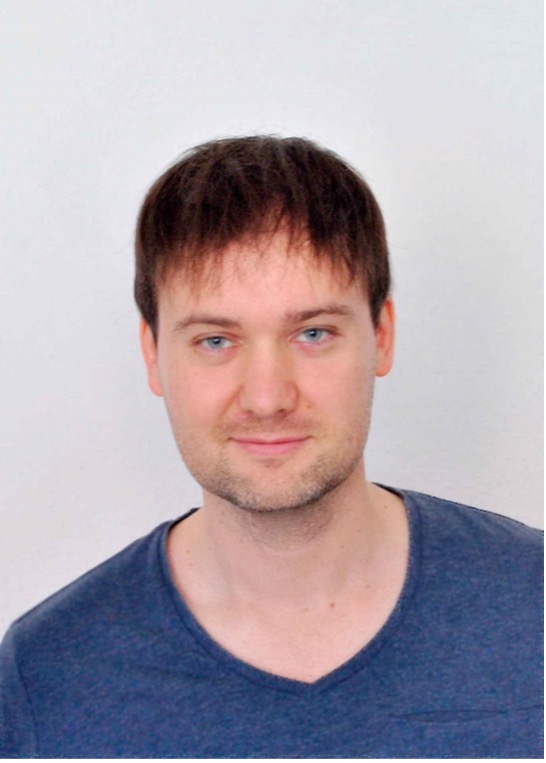
Aleksandrs’s path moved from engineering to science to create intelligent bioelectronic microsystems. He built a foundation in engineering with an M.Sc. in Materials and Processes Engineering (National Engineering School of Saint-Etienne, France). This led to a PhD in Materials Chemistry (The Mulhouse Materials Science Institute, Haute-Alsace University, France), where he investigated self-organization phenomena in polymer materials as a method to design new functional materials and microfluidic systems. To apply these principles, he joined the Leibniz Institute for Solid State and Materials Research, Dresden in 2016, developing integrated microfluidic platforms for single-cell and biological liquid analysis. Since 2022, he has continued this trajectory at Research Center for Materials, Architectures and Integration of Nanomembranes (MAIN), Chemnitz University of Technology, advancing his research on self-assembled 3D microfluidic platforms for (bio)sensors, bio-electrochemical systems, and energy devices.

The design of sensors for biological analysis, from molecules to cells, has traditionally focused on two pillars: the transducer material and the physical detection principle. However, a third, equally critical yet often overlooked pillar is the sensor’s 3D architectural microenvironment: the physical space where biology and measurement intersect.[1,2]
In nature, biological entities are not flatlanders. From the cylindrical confinement of capillaries to the complex topography of tissues, cells inhabit a world defined by curvature, confinement, and dynamic fluid flow. These architectural cues are potent regulators of phenotype, governing gene expression, protein secretion, and metabolism—the very signals we aim to detect [3,4]. Conventional planar sensors, by neglecting these cues, confine samples to unnatural mechanical states, leading to distorted readouts and limited physiological relevance.[5]
This talk explores how embracing biomimetic architecture, specifically moving from 2D planes to perfusable, cylindrical 3D microenvironments, can fundamentally transform sensor performance. Such architecture restores physiological cell mechanics and polarity, enables precise control over critical parameters like shear stress, and enhances detection sensitivity across scales: from single proteins to individual cells and multicellular clusters.
As a compelling proof of concept, we highlight the self-assembled "sensor-in-a-tube"—a platform where microscale tubular channels with integrated sensing elements serve simultaneously as biomimetic vessels and active transducers. We discuss its application for label-free, single-cell immune analysis under flow, demonstrating how intentional architectural design yields clearer, more physiologically relevant measurements.[6,7]
Ultimately, this perspective argues that architecture is not merely a container but a core component of the sensing mechanism. For the future of diagnostics, organ-on-a-chip technology, and fundamental biology, designing the sensor’s 3D shape is as essential as selecting its material or transduction physics.
References:
[1] Baker, B. M., & Chen, C. S. (2012). Deconstructing the third dimension: how 3D culture microenvironments alter cellular cues. Journal of Cell Science, 125(13), 3015-3024. DOI: 10.1242/jcs.079509
2] Duval, K., et al. (2017). Modeling Physiological Events in 2D vs. 3D Cell Culture. Physiology, 32(4), 266-277. DOI: 10.1152/physiol.00036.2016
[3] Tarbell, J. M., & Shi, Z. D. (2013). Effect of the Glycocalyx Layer on Transmission of Interstitial Flow Shear Stress to Embedded Cells. Biomechanics and Modeling in Mechanobiology, 12(1), 111-121. DOI: 10.1007/s10237-012-0385-8
[4] Galie, P. A., et al. (2014). Fluid shear stress threshold regulates angiogenic sprouting. Proceedings of the National Academy of Sciences, 111(22), 7968-7973. DOI: 10.1073/pnas.1310842111
[5] Bhatia, S. N., & Ingber, D. E. (2014). Microfluidic organs-on-chips. Nature Biotechnology, 32(8), 760-772. DOI: 10.1038/nbt.2989
[6] Egunov, A. I., et al. (2020) Impedimetric Microfluidic Sensor-in-a-Tube for Label-Free Immune Cell Analysis. Small, 16(49), 2002549. DOI: 10.1002/smll.202002549
[7] Ghosh. E., et al. (2022) Self-assembled sensor-in-a-tube as a versatile tool for label-free EIS viability investigation of cervical cancer cells. Frequenz, vol. 76, no. 11-12, 2022, pp. 729-740. DOI: 10.1515/freq-2022-0090
Aleksandrs’s path moved from engineering to science to create intelligent bioelectronic microsystems. He built a foundation in engineering with an M.Sc. in Materials and Processes Engineering (National Engineering School of Saint-Etienne, France). This led to a PhD in Materials Chemistry (The Mulhouse Materials Science Institute, Haute-Alsace University, France), where he investigated self-organization phenomena in polymer materials as a method to design new functional materials and microfluidic systems. To apply these principles, he joined the Leibniz Institute for Solid State and Materials Research, Dresden in 2016, developing integrated microfluidic platforms for single-cell and biological liquid analysis. Since 2022, he has continued this trajectory at Research Center for Materials, Architectures and Integration of Nanomembranes (MAIN), Chemnitz University of Technology, advancing his research on self-assembled 3D microfluidic platforms for (bio)sensors, bio-electrochemical systems, and energy devices.
