


Emerging materials and advanced manufacturing strategies are key enablers in the evolution of next-generation microelectronic architectures and sensing devices. In recent years, advanced fabrication techniques have been introduced that support the development of flexible thin-foil systems and self-assembly processes capable of forming complex three-dimensional microstructures. These approaches are based on planar processing of carefully engineered material systems—including organic and inorganic, rigid and soft materials—on conventional wafer substrates. The resulting thin-foil systems are then delaminated in a controlled manner and induced to undergo deterministic shape transformations such as folding, buckling, or rolling. For the first time since the dawn of microelectronics, electronic components can now move beyond traditional two-dimensional fabrication constraints, expanding into the third dimension via scalable, monolithic, wafer-level processes. These ultra-lightweight systems, often in the microgram range and only a few micrometers thick, offer previously unattainable benefits in terms of environmental sustainability and mechanical robustness. When combined with modern electronic fabrication methods, they enable the seamless integration of a wide array of miniature functionalities—including active circuits and specialized sensors such as bio- and magnetic sensors. This development paves the way for a new generation of electronically integrated, miniaturized instruments and sensors, purpose-built for biomedical and environmental applications with high functional density and low ecological footprint.
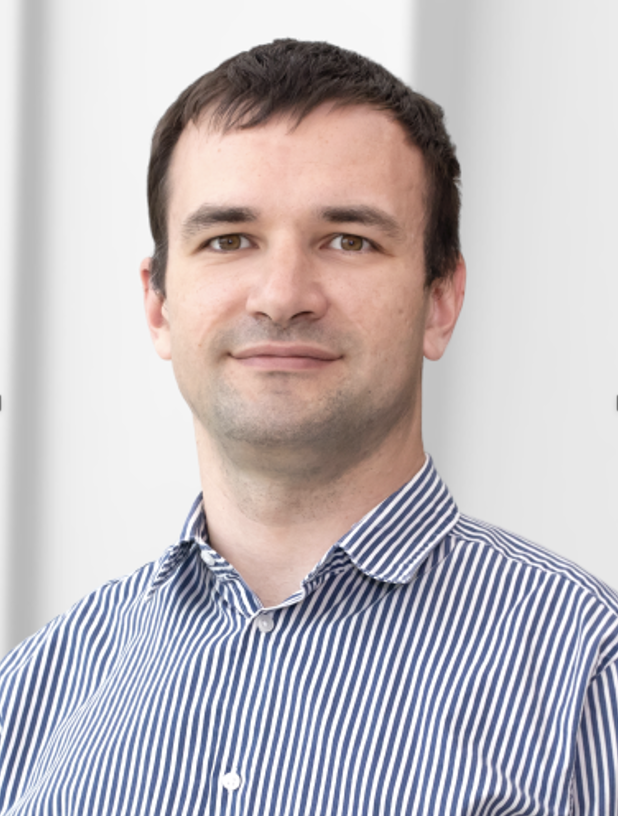
Dr. Daniil Karnaushenko career path bridges engineering, materials science, and nanotechnology toward the development of intelligent bioelectronic microsystems. He earned his PhD in Electrical Engineering and Information Technology in 2016 at the Institute for Integrative Nanosciences, Leibniz IFW Dresden, in collaboration with Technical University Chemnitz, where his research focused on shapeable microelectronics. Following his doctorate, he continued at Leibniz IFW Dresden as a postdoctoral researcher (2016–2020), developing advanced micro- and nanoscale systems. From 2020 to 2022, he led a research group at the Institute for Integrative Nanosciences as a Research Scientist, expanding his work on integrated microfluidic and nanomembrane-based platforms. Since 2022, he has been a Group Leader and Senior Research Scientist at the Research Center for Materials, Architectures and Integration of Nanomembranes (MAIN) at Technical University Chemnitz, where he advances self-assembled 3D microfluidic architectures for biosensors, bioelectrochemical systems, and energy-related devices.

Emerging materials and advanced manufacturing strategies are key enablers in the evolution of next-generation microelectronic architectures and sensing devices. In recent years, advanced fabrication techniques have been introduced that support the development of flexible thin-foil systems and self-assembly processes capable of forming complex three-dimensional microstructures. These approaches are based on planar processing of carefully engineered material systems—including organic and inorganic, rigid and soft materials—on conventional wafer substrates. The resulting thin-foil systems are then delaminated in a controlled manner and induced to undergo deterministic shape transformations such as folding, buckling, or rolling. For the first time since the dawn of microelectronics, electronic components can now move beyond traditional two-dimensional fabrication constraints, expanding into the third dimension via scalable, monolithic, wafer-level processes. These ultra-lightweight systems, often in the microgram range and only a few micrometers thick, offer previously unattainable benefits in terms of environmental sustainability and mechanical robustness. When combined with modern electronic fabrication methods, they enable the seamless integration of a wide array of miniature functionalities—including active circuits and specialized sensors such as bio- and magnetic sensors. This development paves the way for a new generation of electronically integrated, miniaturized instruments and sensors, purpose-built for biomedical and environmental applications with high functional density and low ecological footprint.
Dr. Daniil Karnaushenko career path bridges engineering, materials science, and nanotechnology toward the development of intelligent bioelectronic microsystems. He earned his PhD in Electrical Engineering and Information Technology in 2016 at the Institute for Integrative Nanosciences, Leibniz IFW Dresden, in collaboration with Technical University Chemnitz, where his research focused on shapeable microelectronics. Following his doctorate, he continued at Leibniz IFW Dresden as a postdoctoral researcher (2016–2020), developing advanced micro- and nanoscale systems. From 2020 to 2022, he led a research group at the Institute for Integrative Nanosciences as a Research Scientist, expanding his work on integrated microfluidic and nanomembrane-based platforms. Since 2022, he has been a Group Leader and Senior Research Scientist at the Research Center for Materials, Architectures and Integration of Nanomembranes (MAIN) at Technical University Chemnitz, where he advances self-assembled 3D microfluidic architectures for biosensors, bioelectrochemical systems, and energy-related devices.
