


Grain boundaries can be understood as interfacial phases (also known as “complexions”) that often exhibit distinct structures [Perspective: Science 368, 381 (2024)]. The study of such interfacial phases has provided critical insights into several long-standing problems in materials science, including the origins and atomistic mechanisms of “solid-state” activated sintering, liquid metal embrittlement in Ni–Bi [Science 333, 1730 (2011); 398, 97 (2017)], and grain boundary embrittlement in Ni–S [Nature Communications 9, 2764 (2018)]. Given that phase diagrams are among the most powerful tools in materials science, this seminar will focus on a series of studies aimed at constructing grain boundary “phase” diagrams using thermodynamic modeling, atomistic simulations, and machine learning [Perspective: Interdisciplinary Materials 2, 137 (2023)]. Finally, I will highlight two emerging research directions. First, we have demonstrated that externally applied electric fields can induce grain boundary phase-like transitions via electrochemical coupling [Nature Communications 12, 2347 (2021)], opening new opportunities for tailoring microstructures [Materials Today 73, 66 (2024); J. Eur. Ceram. Soc. 46, 118104 (2026)]. Second, building on recent advances in high-entropy and compositionally complex ceramics [Perspectives: J. Mater. Sci. 55, 9812 (2020); J. Materiomics 12, 101173 (2026)], we utilized a grain boundary transition in compositionally complex perovskite oxides to control microstructural evolution and enhance lithium-ion conductivity [Matter 7, 2395 (2023); J. Adv. Ceram. 3, 9221047 (2025)].
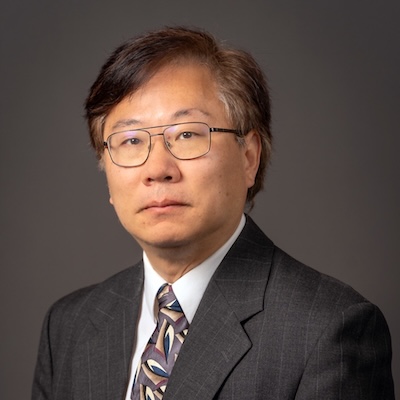
Jian Luo graduated from Tsinghua University in 1994 with dual Bachelor's degrees, one in Materials Science and Engineering and another in Electronics and Computer Technology. He received a M.S. degree in Materials Science and Engineering in 1999, and a Ph.D. degree in Ceramics in 2001, both from M.I.T. Luo worked in the industry for more than two years with Lucent Technologies and OFS Fitel from 2001 to 2003, before he joined the Clemson faculty, where he served as an Assistant Associate/Full Professor of Materials Science and Engineering from 2003 to 2012. In January 2013, he joined UCSD as a Professor of NanoEngineering and Materials Science and Engineering. Luo received a National Science Foundation CAREER award (from the ceramics program) in 2005 and an Air Force Office of Scientific Research Young Investigator award (from the metallic materials program) in 2007. He was named as a National Security Science and Engineering Faculty Fellow (NSSEFF) by the U.S. Department of Defense in 2014.

Grain boundaries can be understood as interfacial phases (also known as “complexions”) that often exhibit distinct structures [Perspective: Science 368, 381 (2024)]. The study of such interfacial phases has provided critical insights into several long-standing problems in materials science, including the origins and atomistic mechanisms of “solid-state” activated sintering, liquid metal embrittlement in Ni–Bi [Science 333, 1730 (2011); 398, 97 (2017)], and grain boundary embrittlement in Ni–S [Nature Communications 9, 2764 (2018)]. Given that phase diagrams are among the most powerful tools in materials science, this seminar will focus on a series of studies aimed at constructing grain boundary “phase” diagrams using thermodynamic modeling, atomistic simulations, and machine learning [Perspective: Interdisciplinary Materials 2, 137 (2023)]. Finally, I will highlight two emerging research directions. First, we have demonstrated that externally applied electric fields can induce grain boundary phase-like transitions via electrochemical coupling [Nature Communications 12, 2347 (2021)], opening new opportunities for tailoring microstructures [Materials Today 73, 66 (2024); J. Eur. Ceram. Soc. 46, 118104 (2026)]. Second, building on recent advances in high-entropy and compositionally complex ceramics [Perspectives: J. Mater. Sci. 55, 9812 (2020); J. Materiomics 12, 101173 (2026)], we utilized a grain boundary transition in compositionally complex perovskite oxides to control microstructural evolution and enhance lithium-ion conductivity [Matter 7, 2395 (2023); J. Adv. Ceram. 3, 9221047 (2025)].
Jian Luo graduated from Tsinghua University in 1994 with dual Bachelor's degrees, one in Materials Science and Engineering and another in Electronics and Computer Technology. He received a M.S. degree in Materials Science and Engineering in 1999, and a Ph.D. degree in Ceramics in 2001, both from M.I.T. Luo worked in the industry for more than two years with Lucent Technologies and OFS Fitel from 2001 to 2003, before he joined the Clemson faculty, where he served as an Assistant Associate/Full Professor of Materials Science and Engineering from 2003 to 2012. In January 2013, he joined UCSD as a Professor of NanoEngineering and Materials Science and Engineering. Luo received a National Science Foundation CAREER award (from the ceramics program) in 2005 and an Air Force Office of Scientific Research Young Investigator award (from the metallic materials program) in 2007. He was named as a National Security Science and Engineering Faculty Fellow (NSSEFF) by the U.S. Department of Defense in 2014.
