
Cellulose is the most abundant biopolymer found in nature. It is chemically highly stable – this is a characteristic that dictates its processing and utilization. Furthermore, cellulose is biodegradable and well-tolerated in medical applications. This seminar provides an overview of the cellulose research carried out at the Institute for Plant and Wood Chemistry. This presentation will introduce the synthesis of biologically active cellulose derivatives and their various applications. It will also demonstrate how cellulose materials are converted into nanostructures and outline the methods used to characterize them. Cellulose can be reshaped into regenerated forms, such as bead cellulose, via a solution-phase process. These materials can serve as inert carriers for active agents and as precursors for new structures.
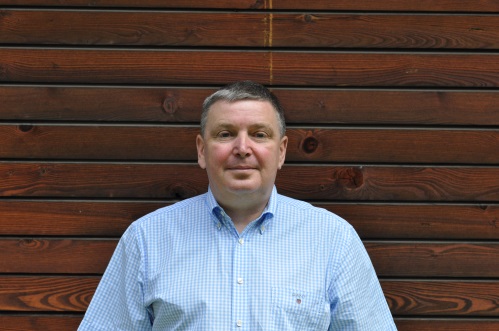
Steffen Fischer studied chemistry at TU Dresden and earned his doctorate in 1993 with a thesis on the synthesis of ferrites. He then moved to the TU Bergakademie Freiberg, where he completed his habilitation in 2003 with a study on the dissolution of cellulose in molten salts. He joined the Fraunhofer Institute for Applied Polymer Research in Potsdam from there. Since 2006, he has held the Chair of Wood and Plant Chemistry at TU Dresden.
His research areas include the fractionation of wood and plant materials, the polymer- analogue modification of cellulose, lignin, and hemicellulose, and their applications.

Cellulose is the most abundant biopolymer found in nature. It is chemically highly stable – this is a characteristic that dictates its processing and utilization. Furthermore, cellulose is biodegradable and well-tolerated in medical applications. This seminar provides an overview of the cellulose research carried out at the Institute for Plant and Wood Chemistry. This presentation will introduce the synthesis of biologically active cellulose derivatives and their various applications. It will also demonstrate how cellulose materials are converted into nanostructures and outline the methods used to characterize them. Cellulose can be reshaped into regenerated forms, such as bead cellulose, via a solution-phase process. These materials can serve as inert carriers for active agents and as precursors for new structures.
Steffen Fischer studied chemistry at TU Dresden and earned his doctorate in 1993 with a thesis on the synthesis of ferrites. He then moved to the TU Bergakademie Freiberg, where he completed his habilitation in 2003 with a study on the dissolution of cellulose in molten salts. He joined the Fraunhofer Institute for Applied Polymer Research in Potsdam from there. Since 2006, he has held the Chair of Wood and Plant Chemistry at TU Dresden.
His research areas include the fractionation of wood and plant materials, the polymer- analogue modification of cellulose, lignin, and hemicellulose, and their applications.
