
Materials science has always been about mastering the lessons inscribed in the intricate interplay between processing, structure, and properties. Yet this process–structure–property paradigm is really complex, high-dimensional, nonlinear, and often beyond the reach of human intuition. Machine learning (ML) is reshaping how we confront this complexity, not only shortening our learning curves but at times rewriting the very syllabus of discovery. In this talk, I will introduce advanced ML workflows that are “schooled” to detect microstructural fingerprints in large, multimodal datasets and to link them directly to material performance. Beyond accelerating simulations, these approaches create feedback loops that adapt processing routes, improving properties by design rather than trial and error. I will highlight case studies ranging from data-driven pattern recognition to experiment–simulation hybrids and physics-informed models, showing how each approach teaches us something different about material behavior. Together, these strategies illustrate how ML can both accelerate discovery and deepen understanding—transforming materials science from observation-driven to intelligence-driven innovation. SNL is managed and operated by NTESS under DOE NNSA contract DE-NA0003525. SAND2025-10343A.
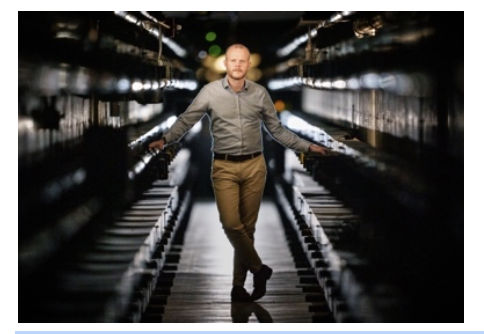
Dr. Rémi Dingreville is a Distinguished Member of the Technical Staff at Sandia National Laboratories and Staff Scientist at the Center for Integrated Nanotechnologies (CINT). He holds a Ph.D. in Mechanical Engineering from the Georgia Institute of Technology in Atlanta GA. With expertise at the intersection of computational materials and data sciences, his work focuses on bridging the gap between atomic and mesoscale models to understand and characterize process- structure-properties for materials reliability. Dr. Dingreville 's research has wide-ranging applications, from understanding the mechanical properties of nanostructured alloyed materials to designing materials for energy storage and conversion. He has published over 160 peer- reviewed articles on these topics. Dr. Dingreville is the recent recipient of the J. Keith Brimacombe Medal (2025), the Sandia’s Employee Recognition Award (2024), and Sandia’s Postdoc Association Distinguished Mentorship Award (2023).

Materials science has always been about mastering the lessons inscribed in the intricate interplay between processing, structure, and properties. Yet this process–structure–property paradigm is really complex, high-dimensional, nonlinear, and often beyond the reach of human intuition. Machine learning (ML) is reshaping how we confront this complexity, not only shortening our learning curves but at times rewriting the very syllabus of discovery. In this talk, I will introduce advanced ML workflows that are “schooled” to detect microstructural fingerprints in large, multimodal datasets and to link them directly to material performance. Beyond accelerating simulations, these approaches create feedback loops that adapt processing routes, improving properties by design rather than trial and error. I will highlight case studies ranging from data-driven pattern recognition to experiment–simulation hybrids and physics-informed models, showing how each approach teaches us something different about material behavior. Together, these strategies illustrate how ML can both accelerate discovery and deepen understanding—transforming materials science from observation-driven to intelligence-driven innovation. SNL is managed and operated by NTESS under DOE NNSA contract DE-NA0003525. SAND2025-10343A.
Dr. Rémi Dingreville is a Distinguished Member of the Technical Staff at Sandia National Laboratories and Staff Scientist at the Center for Integrated Nanotechnologies (CINT). He holds a Ph.D. in Mechanical Engineering from the Georgia Institute of Technology in Atlanta GA. With expertise at the intersection of computational materials and data sciences, his work focuses on bridging the gap between atomic and mesoscale models to understand and characterize process- structure-properties for materials reliability. Dr. Dingreville 's research has wide-ranging applications, from understanding the mechanical properties of nanostructured alloyed materials to designing materials for energy storage and conversion. He has published over 160 peer- reviewed articles on these topics. Dr. Dingreville is the recent recipient of the J. Keith Brimacombe Medal (2025), the Sandia’s Employee Recognition Award (2024), and Sandia’s Postdoc Association Distinguished Mentorship Award (2023).
