
Background:
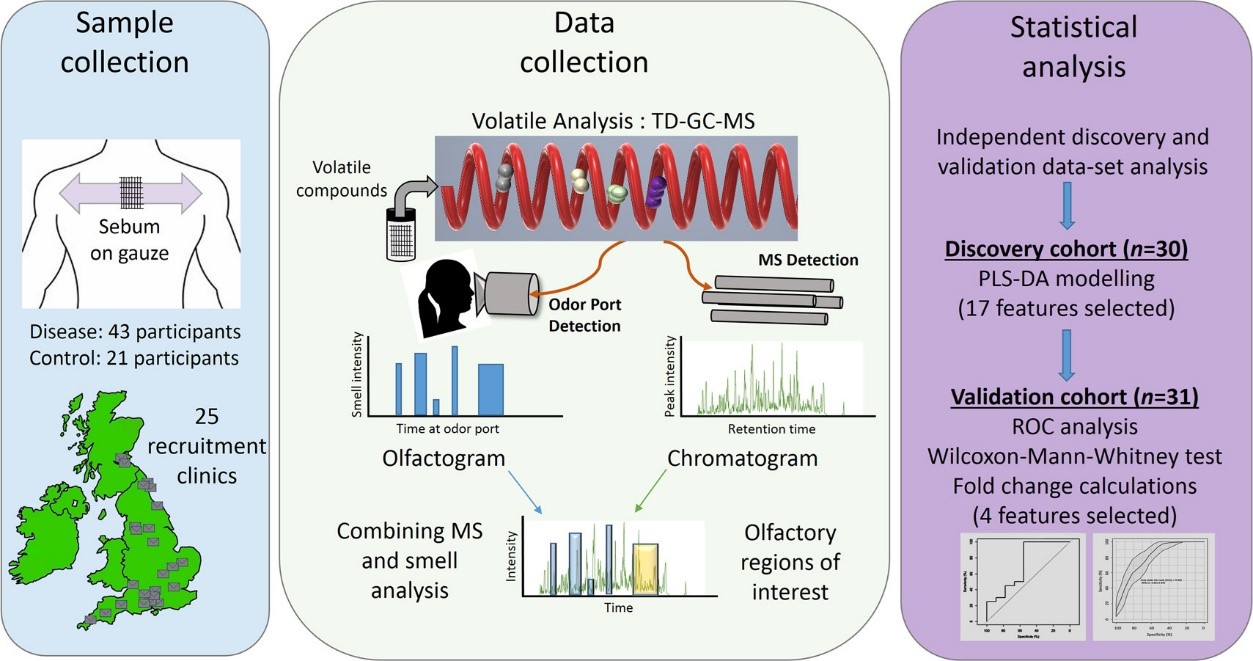
Recent research indicates that neurodegenerative diseases such as dementia may be associated with alterations in human body odor. These changes are believed to result from specific chemical biomarkers present in skin emissions. Understanding these mechanisms could pave the way for developing non-invasive diagnostic tools for early detection of dementia.
Objectives:
This thesis offers the opportunity to explore the chemical and data-driven characterization of body odor samples. Depending on your background and interests, the focus can be adapted to one of the following areas:
• Chemical analysis: Characterization of the chemical composition of collected body odor samples using GC-MS or related analytic techniques.
• Data analysis and AI development: Creation and testing of algorithms for comparing and classifying mass spectra in terms of composition and quantity using machine learning methods.
• Headspace measurements: Configuration of highly selective and sensitive e-nose
• Machine learning models: Development of predictive models for classifying body odor profiles of dementia patients versus healthy controls.
Requirements:
• Interest in analytical chemistry, data science, or bioinformatics
• Basic knowledge of mass spectrometry, signal processing, or machine learning (depending on the chosen topic)
• Motivation to work in an interdisciplinary team combining chemistry, medicine, and computer science
In case of doubts, please reach out to us and we will jointly clarify your potential participation in this project.
We offer:
• Supervision by experienced researchers from multiple disciplines
• Access to state-of-the-art laboratory and analytical equipment
• The opportunity to contribute to an innovative research project with significant scientific and societal relevance
Start date: After agreement
Literature:
1. Trivedi D K, Sinclair E, Xu Y, Sarkar D, Walton-Doyle C, Liscio C et al. Discovery of Volatile Biomarkers of Parkinson’s Disease from Sebum. ACS Cent. Sci. 2019; 5(4): 599–606.
2. Drnovsek E, Parichenko A, Guerraa N P, Pabst J, Wunderlich K, Falkenburger B et al. Human perception of Parkinson's disease body odor in comparison to the volatile organic compounds of Parkinson's disease. Parkinsonism & Related Disorders. 2025; 127:107091.
3. Novikova L B, Kuchmenko T A. Artificial Olfactory Systems in the Diagnosis of Neurodegenerative Diseases. J Anal Chem 80. 2025; 293–298.
4. Mazzatenta A, Pokorski M, Sartucci F, Domenici L, Di Giulio C. Volatile organic compounds (VOCs) fingerprint of Alzheimer's disease. Respiratory physiology & neurobiology. 2015; 209: 81–84.

Background:
Recent research indicates that neurodegenerative diseases such as dementia may be associated with alterations in human body odor. These changes are believed to result from specific chemical biomarkers present in skin emissions. Understanding these mechanisms could pave the way for developing non-invasive diagnostic tools for early detection of dementia.
Objectives:
This thesis offers the opportunity to explore the chemical and data-driven characterization of body odor samples. Depending on your background and interests, the focus can be adapted to one of the following areas:
• Chemical analysis: Characterization of the chemical composition of collected body odor samples using GC-MS or related analytic techniques.
• Data analysis and AI development: Creation and testing of algorithms for comparing and classifying mass spectra in terms of composition and quantity using machine learning methods.
• Headspace measurements: Configuration of highly selective and sensitive e-nose
• Machine learning models: Development of predictive models for classifying body odor profiles of dementia patients versus healthy controls.
Requirements:
• Interest in analytical chemistry, data science, or bioinformatics
• Basic knowledge of mass spectrometry, signal processing, or machine learning (depending on the chosen topic)
• Motivation to work in an interdisciplinary team combining chemistry, medicine, and computer science
In case of doubts, please reach out to us and we will jointly clarify your potential participation in this project.
We offer:
• Supervision by experienced researchers from multiple disciplines
• Access to state-of-the-art laboratory and analytical equipment
• The opportunity to contribute to an innovative research project with significant scientific and societal relevance
Start date: After agreement
Literature:
1. Trivedi D K, Sinclair E, Xu Y, Sarkar D, Walton-Doyle C, Liscio C et al. Discovery of Volatile Biomarkers of Parkinson’s Disease from Sebum. ACS Cent. Sci. 2019; 5(4): 599–606.
2. Drnovsek E, Parichenko A, Guerraa N P, Pabst J, Wunderlich K, Falkenburger B et al. Human perception of Parkinson's disease body odor in comparison to the volatile organic compounds of Parkinson's disease. Parkinsonism & Related Disorders. 2025; 127:107091.
3. Novikova L B, Kuchmenko T A. Artificial Olfactory Systems in the Diagnosis of Neurodegenerative Diseases. J Anal Chem 80. 2025; 293–298.
4. Mazzatenta A, Pokorski M, Sartucci F, Domenici L, Di Giulio C. Volatile organic compounds (VOCs) fingerprint of Alzheimer's disease. Respiratory physiology & neurobiology. 2015; 209: 81–84.