On March 24, 2026, an international and interdisciplinary research group at the Chair of Materials Science and Nanotechnology at TU Dresden announced that it had collected and donated €1,500 to support children with cancer in Dresden. The team, led by Prof. Gianaurelio Cuniberti, said it sees itself not only as part of the global research community but also as an active part of Dresden’s civic society.
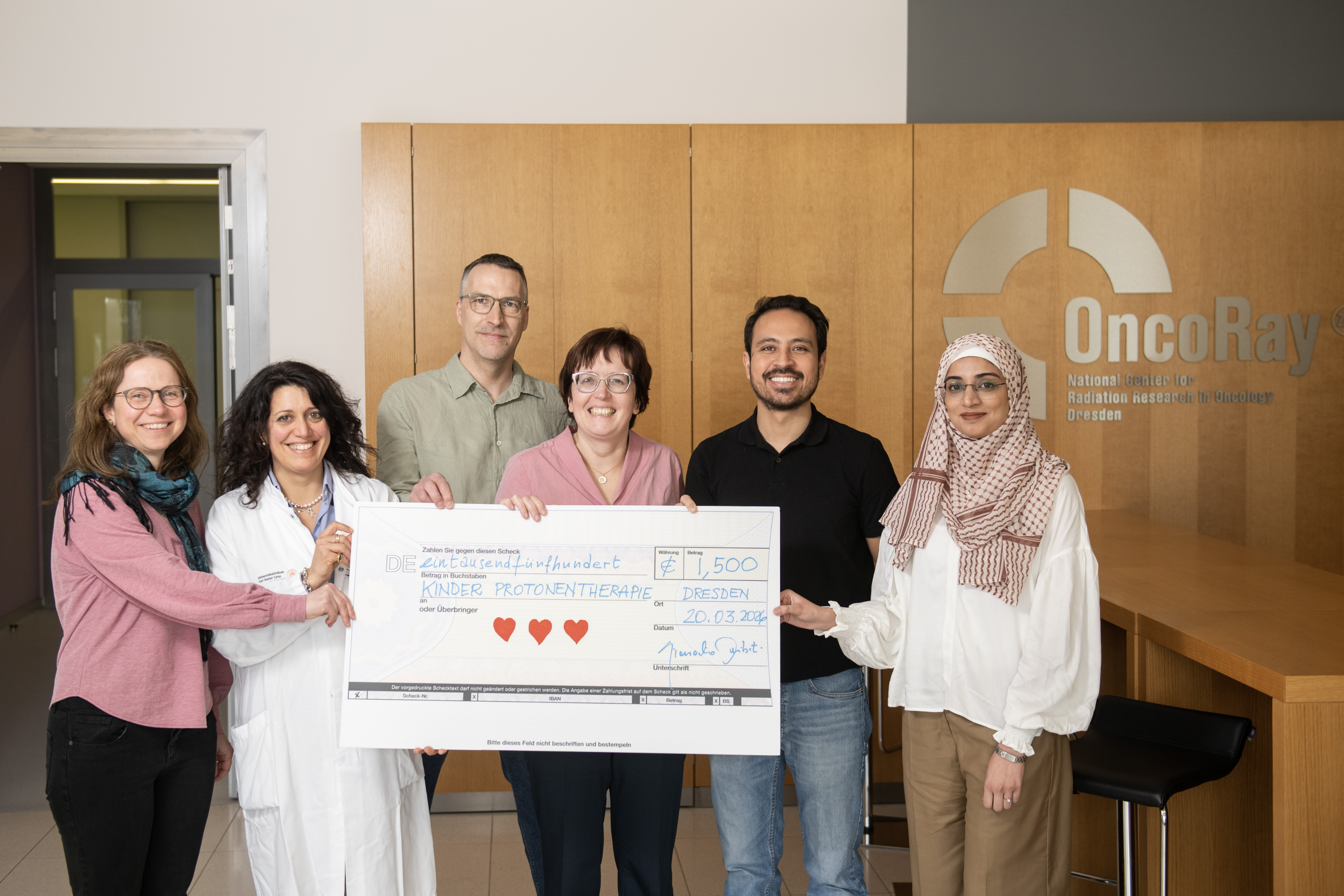
Prof. Cuniberti stated that scientific responsibility does not end at the laboratory door and said the donation is intended to support a project that offers concrete help to children in a difficult situation while showing how research, social engagement, and human connection can work together. According to the organizers and Dresden University Hospital, the funds will primarily benefit young patients who often travel long distances to Dresden for proton therapy, a highly precise form of treatment that can be used particularly gently in children and is available at only a few locations in Germany. Because of this limited availability, many families must come to Dresden for treatment and remain there for extended periods, creating a difficult situation not only for the sick children but also for their siblings and parents. The TU Dresden researchers are using their donation to finance a film that will explain the process of cancer treatment to young patients in clear, age-appropriate language and with accessible visuals. The project partners hope the film will provide orientation, reduce uncertainty, and build trust in the treatment process. Prof. Mechthild Krause, Co-Director of the Radiation Therapy Clinic at Dresden University Hospital, said that cancer therapy is associated with many uncertainties and fears for children and their families, and that a film explaining the treatment in an age-appropriate way and making procedures understandable at an early stage can help build trust and make the beginning of therapy easier.
On March 24, 2026, an international and interdisciplinary research group at the Chair of Materials Science and Nanotechnology at TU Dresden announced that it had collected and donated €1,500 to support children with cancer in Dresden. The team, led by Prof. Gianaurelio Cuniberti, said it sees itself not only as part of the global research community but also as an active part of Dresden’s civic society.
Prof. Cuniberti stated that scientific responsibility does not end at the laboratory door and said the donation is intended to support a project that offers concrete help to children in a difficult situation while showing how research, social engagement, and human connection can work together. According to the organizers and Dresden University Hospital, the funds will primarily benefit young patients who often travel long distances to Dresden for proton therapy, a highly precise form of treatment that can be used particularly gently in children and is available at only a few locations in Germany. Because of this limited availability, many families must come to Dresden for treatment and remain there for extended periods, creating a difficult situation not only for the sick children but also for their siblings and parents. The TU Dresden researchers are using their donation to finance a film that will explain the process of cancer treatment to young patients in clear, age-appropriate language and with accessible visuals. The project partners hope the film will provide orientation, reduce uncertainty, and build trust in the treatment process. Prof. Mechthild Krause, Co-Director of the Radiation Therapy Clinic at Dresden University Hospital, said that cancer therapy is associated with many uncertainties and fears for children and their families, and that a film explaining the treatment in an age-appropriate way and making procedures understandable at an early stage can help build trust and make the beginning of therapy easier.