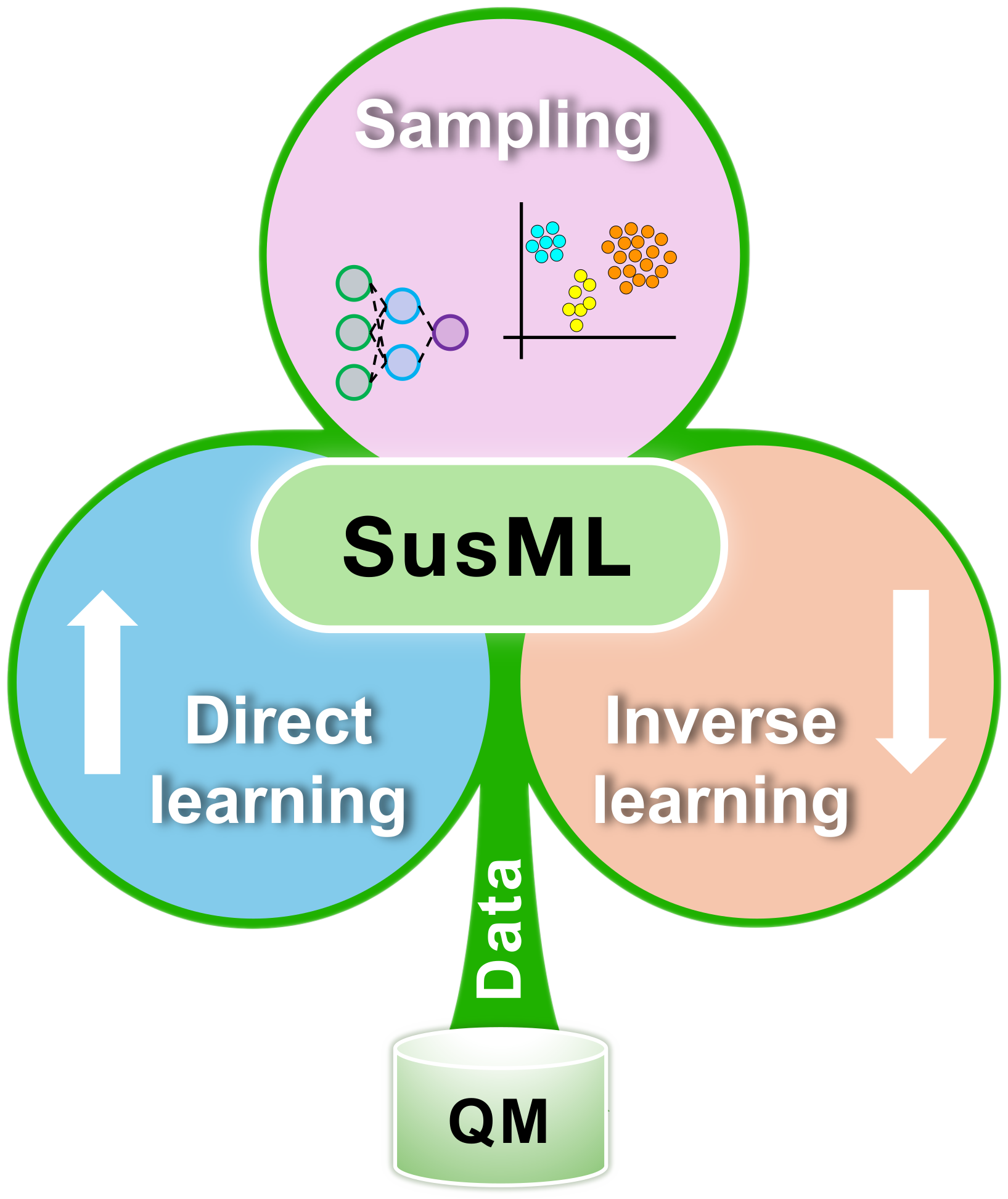
We present the MORE-QX datasets using quantum-mechanical (QM) simulations covering atomistic systems at diverse design stages for gas sensing. The dataset contains 23,838 and 10,441 systems of BOV-receptor dimer interaction in gas phase and on graphene surface to obtain the sensing-related binding features. After analyzing the property space spanned by MORE-QX, we observed flexibility when searching for interaction configuration with a desired set of electronic binding features owing to the weak correlations in QM properties in MORE-QX. To gain insights into the complex interplay between these sensing properties, tree-based machine learning methods are constructed for fast evaluation of binding features using only QM molecular properties combing with explanation framework to gain the key design factors of dimer for the sensing performance are identified. Our work provides valuable insights into the sensing mechanism and design principles of olfactorial receptor for BOV sensing.
We present the MORE-QX datasets using quantum-mechanical (QM) simulations covering atomistic systems at diverse design stages for gas sensing. The dataset contains 23,838 and 10,441 systems of BOV-receptor dimer interaction in gas phase and on graphene surface to obtain the sensing-related binding features. After analyzing the property space spanned by MORE-QX, we observed flexibility when searching for interaction configuration with a desired set of electronic binding features owing to the weak correlations in QM properties in MORE-QX. To gain insights into the complex interplay between these sensing properties, tree-based machine learning methods are constructed for fast evaluation of binding features using only QM molecular properties combing with explanation framework to gain the key design factors of dimer for the sensing performance are identified. Our work provides valuable insights into the sensing mechanism and design principles of olfactorial receptor for BOV sensing.